Table of Contents
Bitcoin mining is often described as “earning passive income with machines.” That sounds simple. The reality is more technical and far more structured.
Mining revenue is not random. It is the result of mathematics, energy consumption, global competition, and market price.
Here is a clear, factual breakdown of how Bitcoin mining generates daily revenue, step by step.
If you are exploring professional hosting or hardware ownership, infrastructure details can be found at https://bitmernmining.com/ and available ASIC miners at https://shop.bitmernmining.com/.
For mining fundamentals and global industry context:
https://bitcoin.org/en/bitcoin-paper
Step 1: Bitcoin Transactions Enter the Network
Every time someone sends Bitcoin, that transaction is broadcast to the network.
These transactions wait in a public queue called the mempool. Miners select transactions from this pool and group them into a “block.”
Each block contains:
- A list of transactions
- A timestamp
- A reference to the previous block
- A cryptographic puzzle
Miners compete to solve this puzzle.
Step 2: Solving the Cryptographic Puzzle
Bitcoin runs on a proof-of-work system.
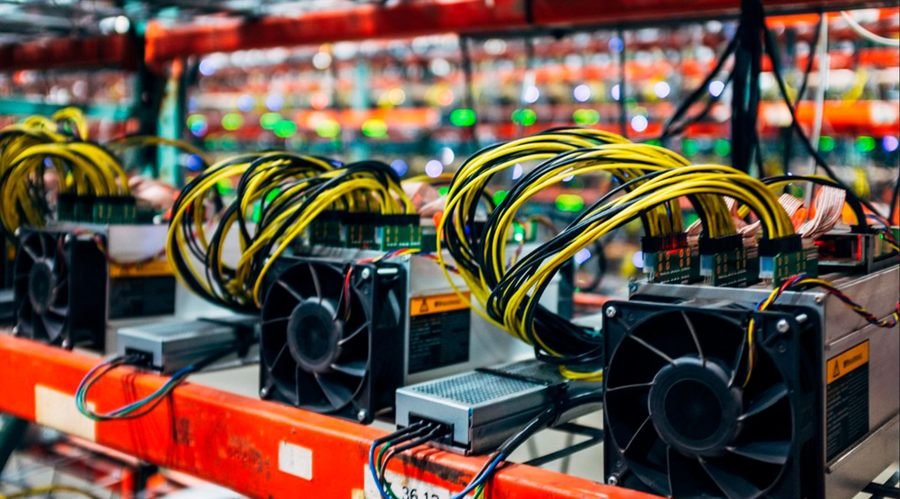
Miners use ASIC machines to perform trillions of SHA-256 hash calculations per second. The goal is to find a hash value below a target set by the network difficulty.
This process is pure computation. No shortcuts. No prediction model. Just processing power and electricity.
The first miner (or mining pool) to find a valid solution:
- Broadcasts the block to the network
- Confirms the transactions
- Receives the block reward
Step 3: The Block Reward
Mining revenue comes from two components:
- Block subsidy
- Transaction fees
Block Subsidy
The block subsidy is newly issued Bitcoin. After the 2024 halving, the subsidy is 3.125 BTC per block.
Roughly 144 blocks are mined per day on average.
That means new Bitcoin enters circulation daily through mining.
This subsidy halves approximately every four years. That mechanism controls Bitcoin’s supply schedule.
Transaction Fees
Users attach fees to transactions to prioritize confirmation.
During periods of high network demand, transaction fees can become significant. In some cycles, fees represent a meaningful percentage of total block reward revenue.
Miners collect both the subsidy and the total transaction fees in the block they validate.
Step 4: Mining Pools and Revenue Distribution
Very few individual miners mine alone.
Because global competition is intense, most miners join mining pools. Pools combine computational power from thousands of machines worldwide.
When the pool successfully mines a block, the reward is distributed proportionally based on:
- Each participant’s contributed hashrate
- The payout model of the pool
This makes revenue more consistent compared to solo mining, where rewards are unpredictable.
Step 5: Hashrate Determines Your Share
Your daily revenue depends primarily on your hashrate.
Hashrate is the number of calculations your miner performs per second. It is measured in terahashes per second (TH/s).
The higher your hashrate relative to the global network hashrate, the larger your share of rewards.
However, network difficulty adjusts automatically every two weeks on average. If more miners join the network, difficulty increases. If miners leave, difficulty decreases.
This ensures Bitcoin continues producing blocks approximately every 10 minutes.
Step 6: Electricity Costs
Mining converts electricity into security.
Revenue is not equal to profit.
To calculate net daily income, you must subtract:
- Electricity costs
- Hosting fees
- Maintenance expenses
Electricity is the dominant operational cost. That is why location matters.
Mining in high-cost residential areas often reduces profitability significantly. Professional hosting facilities typically operate in regions with more competitive power pricing and optimized infrastructure.
If you want to explore hosted mining environments designed for industrial-scale operation, you can review infrastructure details at https://bitmernmining.com/.
Step 7: Market Price of Bitcoin
Even though mining produces Bitcoin directly, its value is tied to market price.
Daily revenue in USD terms depends on:
- BTC earned per day
- The current BTC market price
If Bitcoin price rises, revenue measured in fiat increases. If price falls, fiat-denominated revenue declines.
Mining exposes operators to Bitcoin price volatility, but through production rather than purchase.
Step 8: Hardware Efficiency
Not all miners are equal.
ASIC machines vary in:
- Hashrate output
- Power consumption
- Efficiency per terahash
Modern machines produce more hashrate per watt than older models.
When choosing hardware, efficiency directly affects profitability. You can review available ASIC miners and performance specifications at https://shop.bitmernmining.com/.

Step 9: Daily Revenue Example Structure
While exact figures change constantly due to network difficulty and price, daily mining revenue is calculated as:
Your Miner Hashrate ÷ Total Network Hashrate
× Total Daily Block Rewards
− Electricity and Hosting Costs
This formula updates dynamically as conditions change.
There are no guaranteed returns. Mining profitability fluctuates based on measurable network and market variables.
Why Hosted Infrastructure Changes the Equation
Mining from home introduces risks:
- High electricity tariffs
- Cooling limitations
- Noise restrictions
- Downtime without technical support
Professional hosting environments aim to reduce these operational risks.
Through https://bitmernmining.com/, miners can operate in facilities designed for:
- High uptime
- Continuous monitoring
- On-site technical maintenance
That operational stability protects revenue consistency.
The Core Truth About Mining Revenue
Bitcoin mining generates daily revenue because:
- The network issues new Bitcoin every block
- Transactions include fees
- Miners provide computational security
- Rewards are distributed proportionally
It is a competitive, global marketplace powered by energy and mathematics.
Mining is not speculation. It is infrastructure.
However, profitability is not fixed. It depends on:
- Bitcoin price
- Network difficulty
- Hardware efficiency
- Electricity cost
- Operational uptime
Understanding these factors is essential before entering the space.
If you are evaluating ownership of ASIC hardware or professional hosting solutions, review:
https://shop.bitmernmining.com/
https://bitmernmining.com/
Bitcoin mining revenue is measurable, transparent, and driven by protocol rules. Once you understand the mechanics, the daily income structure becomes logical rather than mysterious.