
Table of Contents
Bitcoin is often discussed as a price chart, a speculative asset, or a macro hedge. Far less attention is paid to the mechanism that makes Bitcoin function at all: bitcoin mining network security.
Without mining, Bitcoin does not exist as a secure, neutral, and censorship-resistant system.
Mining is not a side activity. It is the physical and economic foundation that protects the network against fraud, manipulation, and centralized control. Over the long term, Bitcoin’s survival depends directly on the strength, distribution, and professionalism of its mining infrastructure.
This article explains why mining is essential to Bitcoin’s long-term security, how the security model actually works, and why professional mining operations matter more than ever.
For mining fundamentals and global industry context:
https://bitcoin.org/en/bitcoin-paper
Proof of Work Is Bitcoin’s Security Engine
Bitcoin’s security does not come from code alone. It comes from Proof of Work, a system that converts real-world energy and hardware into cryptographic security.
Every block added to the blockchain represents:
- Real electricity consumption
- Real capital investment
- Real operational effort
This creates an economic wall that attackers must overcome. To rewrite Bitcoin’s history or attack the network, an adversary would need to control a majority of the global hashrate and sustain enormous ongoing costs.
That is the core of bitcoin mining network security: security backed by physics and economics, not trust.
Hashrate Is Not Just a Metric, It Is Defense
Hashrate is often treated as a performance number. In reality, it is a measure of network defense.
Higher hashrate means:
- Attacks become exponentially more expensive
- Chain reorganization becomes impractical
- Network confidence increases
As Bitcoin adoption grows, transaction value grows with it. That means the incentive to attack the network also grows. Mining must scale accordingly to maintain security parity.
This is why long-term Bitcoin security is inseparable from long-term mining investment.
Decentralization Comes From Mining Geography
Bitcoin’s decentralization does not come from node counts alone. It comes from where and how mining operates.
A secure network requires:
- Multiple jurisdictions
- Diverse energy sources
- Independent operators
- No single regulatory choke point
When mining spreads across regions and legal frameworks, the network becomes resistant to political pressure, energy shocks, and coordinated interference.
This is one of the reasons professional hosting providers like BitmernMining focus on geographically diversified, industrial-grade infrastructure instead of single-location setups.
Difficulty Adjustment Keeps Security Adaptive
One of Bitcoin’s most overlooked security features is difficulty adjustment.
Every 2016 blocks, the network automatically recalibrates mining difficulty to match total hashrate. This ensures:
- Block production remains stable
- Security remains proportional to network size
- Temporary hashrate drops do not destabilize the chain
This self-correcting mechanism allows Bitcoin to survive market cycles, energy price fluctuations, and miner exits without compromising security.
Mining adapts. The network survives.
Professional Mining Is a Security Requirement, Not a Luxury
As Bitcoin matures, mining security increasingly depends on operational quality.
Long-term security requires:
- High uptime
- Stable power delivery
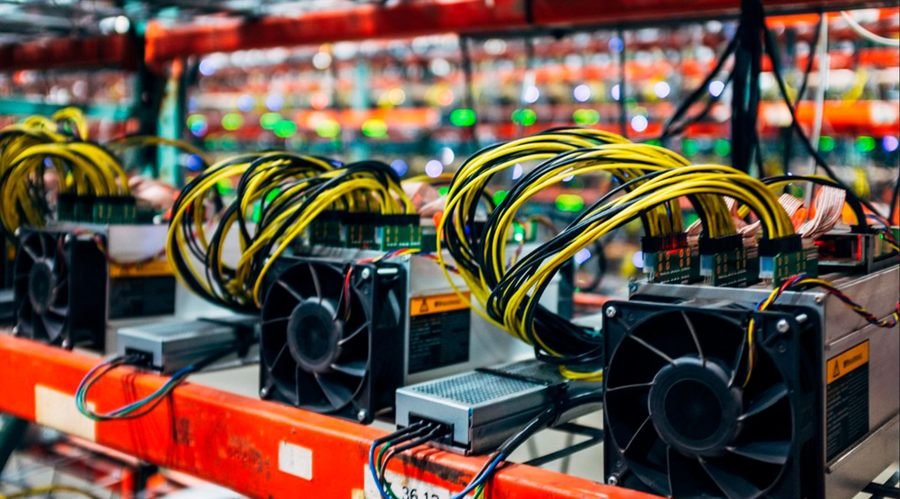
- Proper cooling and hardware maintenance
- Financial resilience during downturns
Amateur or undercapitalized mining introduces fragility. Professional operators provide stability.
This is where industrial-scale hosting and structured operations become essential. BitmernMining focuses on mining as infrastructure, not speculation, aligning operational incentives with network security.
Mining Economics Align With Network Integrity
Bitcoin mining is often misunderstood as extractive. In reality, it is self-regulating.
Miners earn rewards only if:
- They follow consensus rules
- They extend the valid chain
- They protect the network
Any attempt to attack Bitcoin devalues the very asset miners are paid in. This creates a powerful alignment between miner profitability and network integrity.
Bitcoin mining network security works because attacking the system is economically irrational for those most capable of doing so.
Long-Term Security Depends on Sustainable Mining
Bitcoin’s future security depends on mining that can survive:
- Multiple halving cycles
- Bear markets
- Regulatory pressure
- Energy market changes
Sustainable mining operations invest for decades, not quarters. They plan infrastructure, contracts, and capital allocation with long-term survival in mind.
This is why mining is increasingly moving toward professionally managed environments, such as those supported by BitmernMining and hardware sourced through the Bitmern Shop.
Hardware sourcing: https://shop.bitmernmining.com
Industrial hosting solutions: https://bitmernmining.com

Mining Protects Bitcoin After Block Subsidies Decline
Over time, block rewards decline. Transaction fees will play a larger role.
For this transition to succeed:
- Mining must remain profitable
- Infrastructure must already be in place
- Security cannot collapse during reward reductions
Professional mining ensures continuity. A weak mining sector would threaten Bitcoin’s security model in later decades.
Strong mining today protects Bitcoin tomorrow.
Why Bitcoin’s Security Is a Physical Reality
Bitcoin is not secured by belief. It is secured by:
- Warehouses
- Power plants
- Transformers
- Cooling systems
- Global logistics
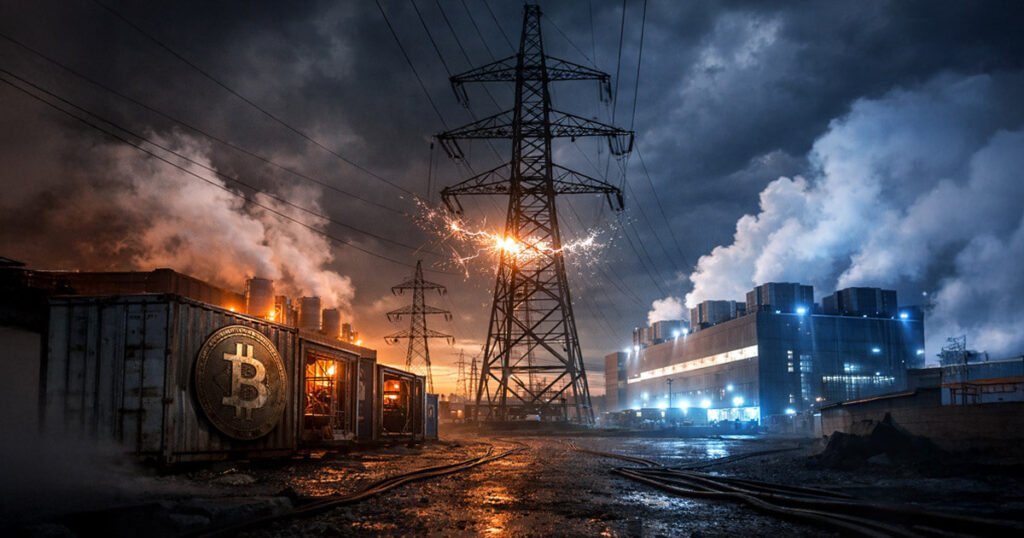
This physical footprint is what makes Bitcoin uniquely resilient among digital systems. Mining anchors Bitcoin in the real world.
Without mining, Bitcoin becomes theoretical. With mining, it becomes unstoppable.
Mining Is the Invisible Backbone of Bitcoin
Most users never see mining. They see transactions confirm and blocks appear.
But behind every confirmation is an industry that:
- Competes globally
- Invests continuously
- Absorbs risk
- Protects the network
Bitcoin mining network security is not optional. It is the foundation of everything built on top of Bitcoin.
Final Thoughts
Bitcoin’s long-term security is not guaranteed by code alone.
It is guaranteed by miners who commit capital, energy, and infrastructure to protect the network every single day.
As Bitcoin grows, mining must grow with it.
As value increases, security must scale accordingly.
This is why professional mining operations, industrial hosting, and disciplined scaling matter, not just for miners, but for Bitcoin itself.