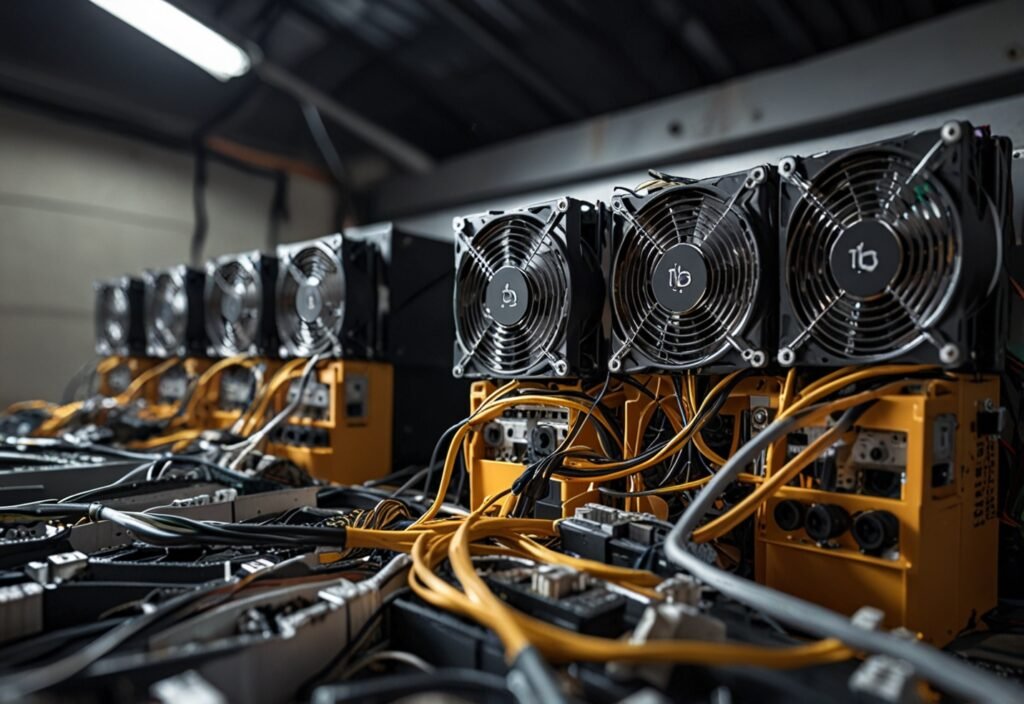

Upgrading mining hardware and firmware is essential for keeping profitability high and operations efficient—but it also comes with risks: downtime, reduced hashrate while balancing moves, and logistical complexity. Bitmern’s hosting model is designed to minimise these risks and keep clients’ rigs running smoothly, even during upgrade cycles. Here’s how they pull it off.
Why Managed Upgrades Matter
Mining hardware and software upgrades may include:
- Replacing older ASICs with higher TH/s or more efficient models
- Upgrading firmware to improve performance or fix bugs
- Enhanced cooling, power supply or infrastructure updates
- Network or hosting infrastructure improvements behind the scenes
Each upgrade can temporarily interrupt hashing, which reduces earnings, introduces risk, and may degrade ROI if not handled well. For hosted clients of Bitmern, the key is to make these transitions seamless.
Key Steps Bitmern Uses to Minimise Downtime
- Parallel Deployment & Staggered Roll-outs
- Rather than pulling all machines offline at once, Bitmern leverages staging: new hardware or firmware is installed, tested, and brought online incrementally while existing rigs continue operation.
- This means the fleet continues hashing at near-full capacity during upgrades.
- Redundant Infrastructure & Hot-Swap Planning
- Hosting locations are equipped with infrastructure (power, cooling, network) capable of handling upgrades without major disruption.
- If hardware needs replacement, Bitmern uses hot-swap or modular rigs so one miner can be swapped while others remain operational.
- According to their infrastructure page, Bitmern offers “Regular optimization updates; Real-time performance monitoring; 24/7 technical support” as part of their service.
- Comprehensive Monitoring & Maintenance Protocols
- Before an upgrade, monitoring data helps identify which machines are performing sub-optimally, so they can be targeted first.
- During upgrade, the monitoring system tracks performance to catch any regressions quickly.
- Their article on uptime emphasises that Bitmern’s systems are built for “transparent, accurate reporting—no guesswork or hidden downtime.”
- Client Communication & Scheduled Windows
- Clients are informed ahead of any upgrade schedule, and provided with expected windows and fallback plans.
- Clear dashboards and real-time status updates mean clients know exactly what is happening and when their miner is fully back online.
- Testing Environment & Quality Assurance
- New firmware or hardware are tested in a staging environment before full rollout, reducing the risk of bugs, performance drops or failures once live.
- This pre-deployment testing protects clients from losing hashrate due to faulty upgrades.
Benefits for Clients
- Higher Uptime: With fewer and shorter interruptions, clients maintain near-continuous earnings.
- Performance Gains Without Sacrifice: Clients benefit from newer hardware or better firmware without taking long-term hashing breaks.
- Reduced Risk: Hosting upgrades properly means less chance of botched firmware, failed deployments, or unsupported hardware.
- Future-Proofing: By handling upgrades as part of service, Bitmern clients stay ahead of the curve instead of being left behind with outdated rigs.
What to Ask Your Host When They Do Upgrades
If you’re considering a hosting provider (or evaluating Bitmern), ask:
- How are upgrades scheduled, and how will my miner’s hashing be affected?
- What is your rollback plan if an upgrade causes a malfunction?
- Do you test firmware/hardware in staging before live deployment?
- How are clients kept informed during upgrade work?
- Can you show historical metrics for uptime during past upgrade cycles?
Final Thoughts
Upgrading mining hardware and firmware is inevitable—but the difference between a seamless upgrade and a costly disruption often lies in how the hosting provider handles the transition. Bitmern’s model—built on redundancy, monitoring, staged deployment and clear client communication—aims to ensure that your mining operations upgrade with minimal downtime, not in spite of it.