
Table of Contents
Bitcoin mining has never been just about hardware efficiency or Bitcoin price. Over the last decade, one variable has quietly separated miners who survive from those who disappear: jurisdiction choice.
Jurisdiction choice impacts mining survival more than most investors realize. Regulation, energy policy, taxation, grid access, political stability, and enforcement discretion all shape whether a mining operation can operate consistently over multiple cycles.
Miners that fail to account for jurisdictional risk often learn the hard way that profitability on paper does not translate to survival in reality.
For mining fundamentals and global industry context:
https://bitcoin.org/en/bitcoin-paper
Why Jurisdiction Is Not a Legal Detail but an Operational Variable
Many investors treat jurisdiction as a compliance checkbox. In practice, it is an operational constraint.
A jurisdiction determines:
- How predictable electricity pricing will be
- Whether mining is politically tolerated
- How quickly regulations can change
- Whether contracts are enforceable
- How capital controls affect payouts
- How grid operators prioritize industrial loads
Mining operations that ignore these factors often face shutdowns, forced relocations, or unplanned cost explosions.
Energy Policy Is the First Survival Filter
Bitcoin mining is electricity-intensive by design. That makes miners extremely sensitive to energy policy shifts.
In some regions, electricity pricing is stable and long-term contracts are respected. In others, energy costs are subsidized until political pressure forces sudden price hikes or restrictions.
Jurisdiction choice impacts mining survival because miners cannot simply absorb energy shocks the way other industries can. A few cents per kWh can determine whether a fleet is profitable or underwater.
This is why professional miners prioritize jurisdictions with:
- Industrial energy frameworks
- Long-term power contracts
- Independent grid operators
- Predictable pricing mechanisms
Regulatory Stability Matters More Than Friendly Headlines
Some countries appear “pro-crypto” until market conditions change. Mining often becomes a political scapegoat during energy shortages, elections, or environmental debates.
History shows that:
- Mining bans are often sudden
- Enforcement can be selective
- Existing contracts offer little protection
- Appeals come too late for hardware-intensive businesses
Jurisdiction choice impacts mining survival because regulatory volatility introduces asymmetric downside risk. Miners cannot pause operations without bleeding capital.
Tax Treatment and Capital Controls Quietly Kill ROI
Mining returns are not just about BTC mined. They depend on whether profits can be repatriated, reinvested, or hedged.
Some jurisdictions impose:
- Withholding taxes on energy usage
- Unclear VAT treatment on mining output
- Restrictions on foreign currency transfers
- Sudden retroactive tax claims
Professional miners model tax and capital flow risk before deploying hardware. Survival is about cash flow control, not theoretical margins.
Enforcement Discretion Is the Hidden Risk
Even where mining is technically legal, enforcement discretion can create uncertainty.
Local authorities may:
- Interpret regulations inconsistently
- Delay permits indefinitely
- Apply rules selectively
- Respond to political pressure
Jurisdiction choice impacts mining survival because discretionary enforcement increases operational friction and downtime. Downtime is often more expensive than bad hardware.
Why Hosting Abroad Has Become a Survival Strategy
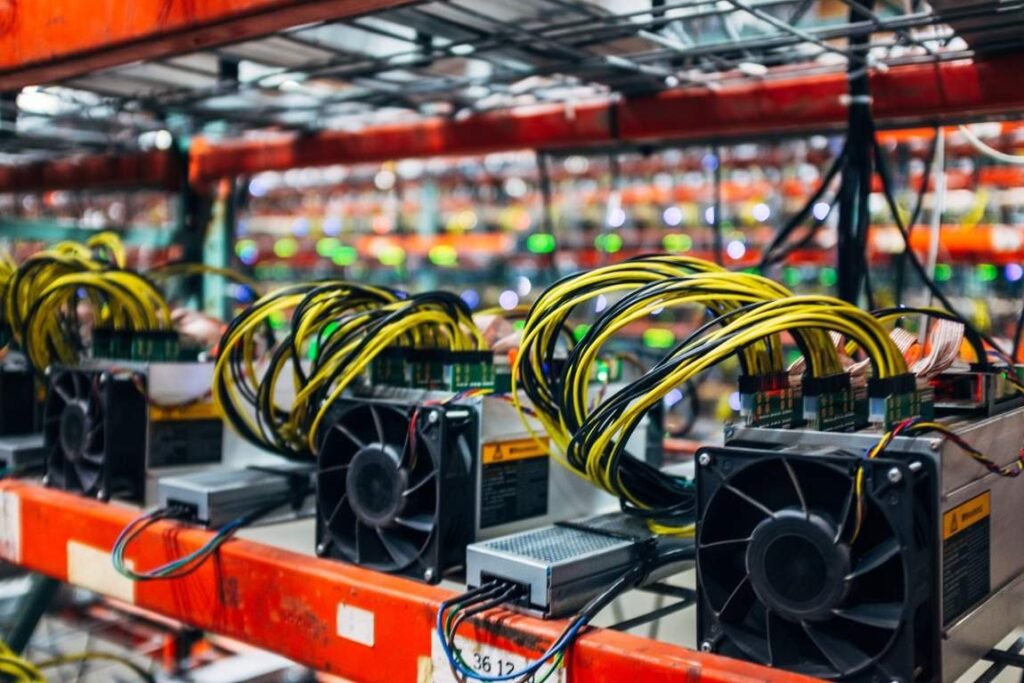
As regulatory pressure increases in certain regions, many miners are shifting to professional hosting abroad.
Hosting abroad allows miners to:
- Access stable energy markets
- Reduce regulatory exposure
- Lock predictable operating costs
- Separate ownership from operations
- Scale without local infrastructure risk
This is not about regulatory arbitrage. It is about operational continuity.
Why Bitmern Focuses on Jurisdictional Discipline
At BitmernMining, jurisdiction selection is treated as a core investment decision, not an afterthought.
Bitmern operates facilities in regions selected for:
- Energy stability
- Regulatory clarity
- Industrial infrastructure
- Long-term hosting viability
This approach allows investors to focus on production rather than crisis management.
Scaling Safely Requires Jurisdictional Alignment
Scaling mining operations amplifies jurisdictional risk. A single miner can be relocated. A fleet cannot.
Jurisdiction choice impacts mining survival most at scale. Regulatory shifts that are survivable for small operators become existential for larger portfolios.
This is why institutional miners avoid unstable jurisdictions even when short-term costs look attractive.
Hardware Strategy Must Match Jurisdiction Strategy
High-efficiency hardware does not compensate for bad jurisdictional choices.
Even the best miners fail when:
- Energy access is interrupted
- Regulations change overnight
- Export controls restrict replacements
- Customs delays strand equipment
This is why Bitmern combines hardware access with jurisdictionally optimized hosting.
BITMERN CHRISTMAS MEGA DEAL: Scale in the Right Jurisdiction
For investors ready to scale within a stable jurisdictional framework, BitmernMining has launched a limited Christmas offer on the Bitmain S21 Pro.
Current offer:
- Buy 4 Bitmain S21 Pro, get the 5th at 50% discount
- Buy 9 Bitmain S21 Pro, get the 10th completely free
This offer is designed for miners who want to scale efficiently while securing professional hosting in jurisdictions selected for long-term survival.
Inventory is limited, and deployment is prioritized for hosted clients.
Contact Bitmern on WhatsApp to secure units:
https://wa.me/971585382409

Jurisdiction Choice Is a Long-Term Competitive Advantage
Bitcoin mining is a multi-cycle business. Surviving downturns, regulatory shifts, and energy shocks requires structural discipline.
Jurisdiction choice impacts mining survival because it defines the rules of the game before hash rate even matters.
Miners who understand this build operations that last. Those who ignore it eventually exit the market.