Table of Contents
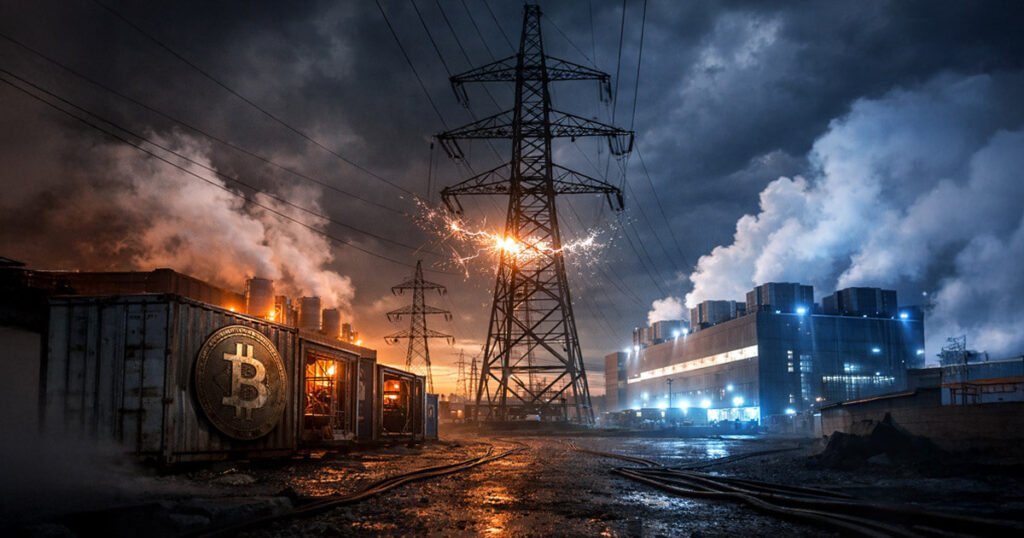
Transmission bottlenecks bitcoin mining is one of the most overlooked forces shaping the global distribution of hashrate. While market participants often attribute mining location decisions to regulation, taxation, or political friendliness, the more decisive factor is often far simpler: the physical limits of power transmission.
Bitcoin mining does not follow capital markets. It follows electricity.
More specifically, it follows electricity that cannot easily move elsewhere.
For mining fundamentals and global industry context:
https://bitcoin.org/en/bitcoin-paper
Understanding Transmission Bottlenecks
Electricity generation and electricity consumption are not always geographically aligned. Power plants may be located far from population centers due to resource availability. Hydroelectric dams are built near rivers. Wind farms are installed in remote plains. Solar fields expand in desert regions.
Transmission infrastructure is required to move that energy from where it is generated to where it is needed.
When transmission capacity is insufficient, energy becomes trapped. This is called a transmission bottleneck.
In such cases:
- electricity supply exceeds local demand
- grid operators curtail generation
- wholesale prices collapse locally
- energy producers face wasted output
This environment creates opportunity for Bitcoin mining.
Why Transmission Constraints Create Mining Opportunity
Bitcoin mining is location-flexible. Unlike industrial manufacturing or population-based services, it does not require proximity to consumers.
If electricity cannot be economically transmitted to cities, Bitcoin mining can be deployed directly at the source.
Transmission bottlenecks bitcoin mining becomes a structural dynamic:
- Energy is generated in remote location.
- Transmission lines lack capacity.
- Local electricity prices drop.
- Mining becomes economically viable.
This dynamic has shaped mining clusters in multiple regions globally.
Mining as a Buyer of Last Resort
When grid congestion forces curtailment, renewable generators are often paid less or forced offline.
Mining can:
- absorb excess generation
- operate flexibly during oversupply
- shut down when transmission demand rises
- stabilize revenue for producers
This positions mining as a flexible load aligned with constrained grids.
Rather than competing with households, mining often competes with wasted electricity.
Geographic Examples of Transmission-Driven Mining
Regions where mining has flourished often share characteristics:
- Remote hydroelectric capacity
- Wind-heavy rural zones
- Isolated geothermal generation
- Natural gas flaring sites
These are not financial hubs. They are energy hubs with limited transmission pathways.
Transmission bottlenecks bitcoin mining explains why hashrate migrates to specific energy-rich but population-poor areas.
Why Transmission Upgrades Change Mining Economics
Transmission lines are expensive and politically complex to build.
If new high-capacity transmission infrastructure is deployed:
- local power prices may normalize
- mining advantage shrinks
- grid congestion reduces
- mining may relocate
This shows that mining geography is fluid and deeply tied to infrastructure development timelines.
Mining often exists in the gap between generation growth and transmission expansion.
Mining Competes With Grid Expansion, Not With Cities
One common misconception is that mining competes directly with residential consumers for power.
In reality, transmission bottlenecks often isolate mining from population centers.
Mining tends to locate:
- behind substations
- near generation nodes
- within industrial power zones
- in areas where export capacity is constrained
This structural positioning limits direct consumer competition.
Energy Pricing Under Congestion
Transmission constraints create localized pricing effects.
In congested zones:
- wholesale prices can fall dramatically
- generators may accept lower margins
- power purchase agreements become more flexible
Mining thrives in these pricing distortions.
This reinforces why transmission bottlenecks bitcoin mining is not a narrative, but an economic mechanism.
Infrastructure Requirements for Transmission-Aligned Mining
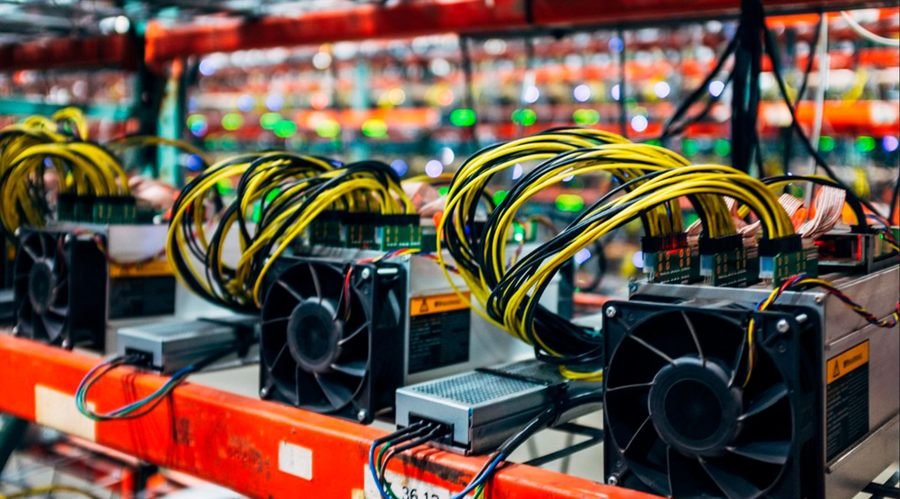
Operating near transmission bottlenecks requires industrial infrastructure:
- Substation proximity
- Load balancing systems
- Scalable cooling solutions
- Flexible demand controls
- Real-time grid communication
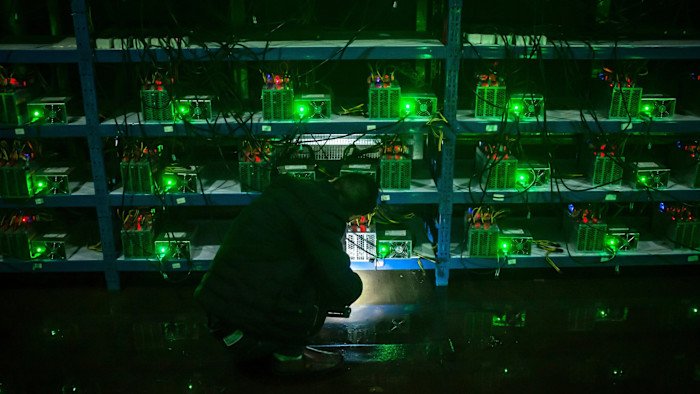
Mining farms in these environments resemble industrial energy facilities more than tech startups.
At Bitmern Mining, infrastructure is designed to integrate with real-world grid conditions, not abstract market assumptions.
More here: https://bitmernmining.com/
Why Not All Energy Is Equal for Mining
Low-cost electricity alone is insufficient.
Mining requires:
- transmission stability
- voltage consistency
- frequency reliability
- interconnection agreements
Regions with transmission bottlenecks may offer cheap power, but operational execution determines success.
This is why professional infrastructure planning is critical.
Hardware Alignment With Grid Constraints
Mining hardware must match energy availability patterns.
In congestion-heavy zones:
- dynamic load management matters
- flexible deployment architecture matters
- uptime optimization must coexist with curtailment flexibility
The Bitmern Shop supports hardware acquisition aligned with structured industrial deployment models rather than speculative setups.
Explore here: https://shop.bitmernmining.com/
Hardware is only effective when grid context is understood.

Transmission Bottlenecks and Renewable Expansion
As renewable energy penetration increases globally, transmission constraints intensify.
Wind and solar are often built faster than transmission can expand.
This creates:
- stranded generation
- curtailment periods
- localized oversupply
Bitcoin mining integrates naturally into this transition by monetizing excess generation.
Mining does not solve transmission issues. It monetizes them.
Regulatory Implications
Governments may regulate mining differently depending on transmission dynamics.
Regions with:
- constrained grids
- limited export capacity
- renewable oversupply
may view mining as a stabilizing tool.
Regions with:
- tight transmission
- high demand density
- capacity stress
may restrict mining expansion.
Transmission bottlenecks bitcoin mining therefore influences regulatory posture indirectly.
Mining Mobility as a Structural Advantage
Unlike heavy manufacturing, mining infrastructure can be redeployed.
When:
- transmission improves
- pricing changes
- congestion patterns shift
mining capacity can relocate.
This flexibility gives mining a unique advantage in energy markets shaped by infrastructure constraints.
Final Perspective
Bitcoin mining geography is not determined by hype, headlines, or social sentiment.
It is shaped by:
- transmission capacity
- grid congestion
- localized pricing
- infrastructure deployment speed
Transmission bottlenecks bitcoin mining explains why hashrate clusters in energy-rich regions and shifts as grids evolve.
Mining follows electricity.
More precisely, it follows electricity that cannot easily travel elsewhere.
Operators who understand this dynamic design around energy reality, not market excitement.
That is where long-term advantage is built.